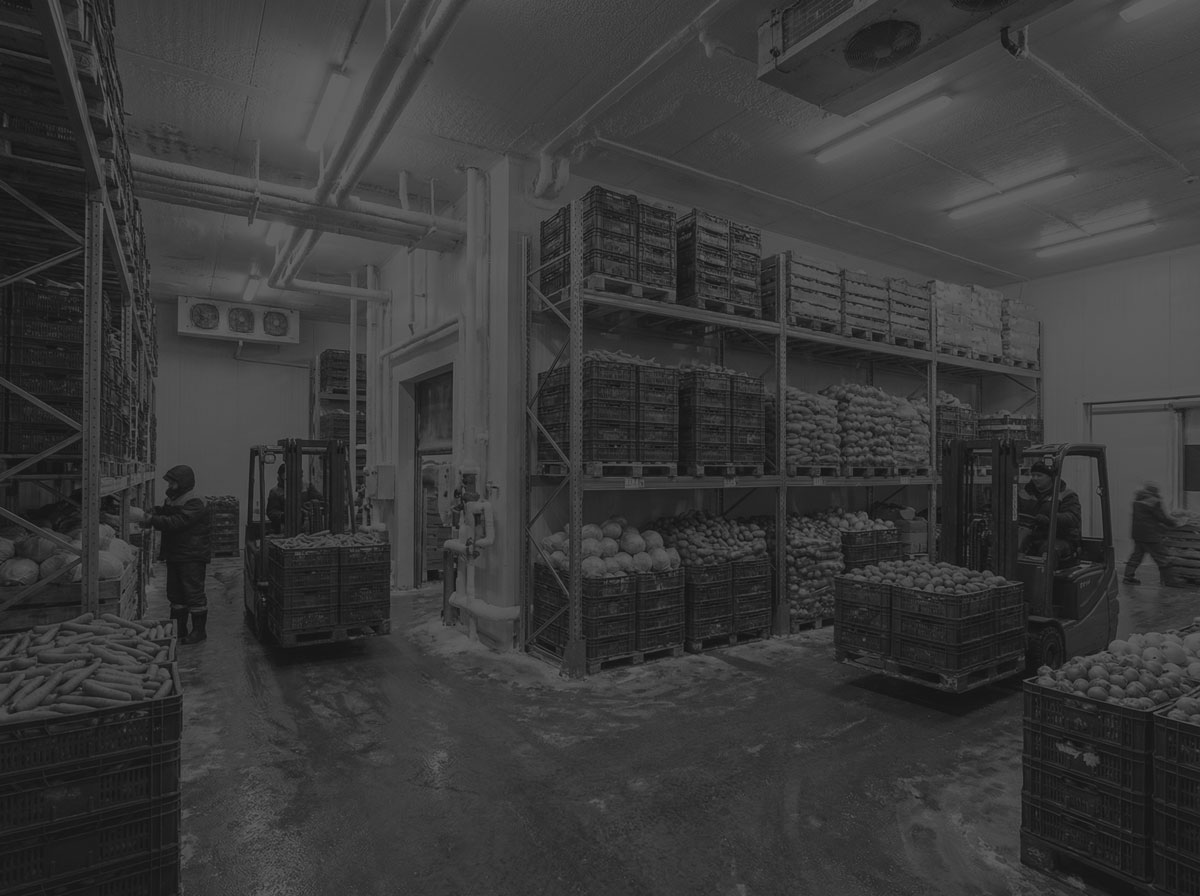


Cold Storage & Freezer Warehouse WMS
A cold storage WMS is a warehouse management system configured for temperature-controlled operations: frozen zones at -18°C to -25°C, chilled zones at 0°C to 4°C, and ambient areas, all under one system. It adds the controls that general warehouse software lacks, including FEFO picking, lot and expiry tracking, catch-weight inventory and cold-chain traceability.
Balloon One implements Infios WMS (formerly Körber WMS) for cold storage and freezer warehouses across the UK, with more than 20 years of food and beverage sector experience behind each deployment.
What this page covers
Temperature-zone management for freezer, chilled and ambient areas
FEFO, FIFO, lot, batch and expiry-date control for perishable goods
Catch-weight inventory for variable-weight products
Cold-chain compliance and traceability aligned to HACCP, BRCGS and FDA practice
Freezer-rated mobile scanning, RF picking and voice picking below zero
Temperature capture at pallet and lot level
Reducing picking errors in cold environments
How Infios WMS from Balloon One compares to Made4Net, AEB, Datex Footprint, Royal 4 WISE Polar, Logimax and In-DEX
FAQ: the questions cold storage WMS buyers ask most
Trusted by leading brands:
Which WMS supports cold storage and freezer warehouses?
A WMS suits cold storage when it can enforce temperature-zone rules at putaway and picking, rotate stock by expiry date rather than receipt date, track lot and batch through every movement, and record actual weight for variable-weight products. Most general-purpose systems do one or two of these. A cold storage WMS does all of them across receiving, putaway, picking, packing, counting and despatch.
Infios WMS, implemented by Balloon One, is configured around those tasks for frozen, chilled and ambient operations, and extends each one with the compliance and temperature controls that perishable goods demand.
Testimonial
Midland Chilled Foods, a tier 1 distributor of frozen, chilled and ambient food, replaced paper picking with Infios WMS through Balloon One. Steve Rooney, Head of IT, on the change: “We buy and sell many of our products by weight,” which had meant catch-weights noted on paper and keyed in later. After go-live: “We can employ someone, give them a scanning gun and just ten minutes’ training and off they go.” Order paperwork fell from more than 1,200 sheets of A4 a day across two warehouses to two labels per order.
Balloon One for cold storage and freezer warehouse WMS
UK implementer of Infios WMS with more than 20 years in food and beverage distribution.
Temperature-zone management: freezer, chilled and ambient
Temperature-zone management lets a single warehouse run frozen, chilled and ambient areas under one WMS. Each storage location is assigned a zone type in the master data: freezer at -18°C to -25°C, chilled at 0°C to 4°C, or ambient. Every SKU carries its permitted temperature class. Putaway logic will not direct a frozen SKU to a chilled or ambient location, and picking logic will not allocate stock stored outside its permitted range. The result is that product stays in the correct environment from goods-in to despatch without relying on operators to remember the rules.
Balloon One configures these zone rules in Infios WMS during implementation, including multi-temperature sites where a chilled pick face sits alongside frozen bulk storage.
FEFO, lot, batch and expiry-date management
FEFO (First-Expired-First-Out) picks the stock closest to its expiry date first. FIFO (First-In-First-Out) picks the oldest received stock first. The two diverge whenever batches have different shelf lives regardless of receipt date, which is common in frozen and chilled food, so FEFO is the correct rotation rule for perishables.
A cold storage WMS captures lot, batch and expiry at receiving, holds that data against every pallet and unit, and uses it to drive allocation. Short-dated or expired stock can be blocked from outbound orders automatically, and lot splitting keeps traceability intact when a pallet is broken down. The same data underpins recall readiness.
Infios WMS from Balloon One enforces FEFO as standard, with configurable minimum remaining shelf life by customer, so a retailer that demands 10 days of life at delivery is never sent 8.
Catch-weight inventory
Catch-weight inventory tracks both a nominal quantity and an actual captured weight for products sold by variable weight: meat, fish, poultry and cheese. A case ordered as one unit is picked, priced and invoiced on its real weight. Weight is captured at receiving and again at picking, so stock records, despatch documents and ERP figures reflect true weight rather than an assumed average.
This matters in cold storage because a large share of frozen and chilled food is variable-weight, and inaccurate weight records create billing errors and stock discrepancies at the same time. Balloon One configures catch-weight capture in Infios WMS and passes actual weights through to the ERP, including Microsoft Dynamics 365 Business Central via its BOX integration layer.
Cold-chain compliance, traceability and recall readiness
Cold storage operations face three overlapping obligations: food safety standards, traceability, and temperature control. A cold storage WMS addresses them through lot-level tracking, temperature logging and audit trail generation. Traceability runs in both directions: from a received batch to every order it shipped on, and from a customer order back to its source lot.
In practice this supports HACCP-based food safety controls, BRCGS (British Retail Consortium Global Standards) audits common in UK grocery supply, and FDA traceability practice for exported product. For a recall, a coordinator can identify every affected pallet and lot, trace where the stock went, and produce an audit trail for the Food Standards Agency or a retail customer’s compliance team.
Balloon One’s implementation of Infios WMS builds these controls in from day one. For more on lot-level traceability, see Lot tracking for food traceability and recalls.
Hardware and picking in sub-zero environments
Standard mobile devices fail in freezers. Condensation forms when a device moves between -25°C and ambient, batteries lose capacity in the cold, and touchscreens stop responding to gloved hands. Freezer-rated hardware addresses each of these with heated or condensation-resistant scan windows, cold-rated batteries and glove-friendly screens rated to -25°C or below.
A cold storage WMS should support RF picking with barcode scanners and mobile devices, voice picking for hands-free operation, mobile printers and movable RF gates, and let the operator choose the method per zone. Balloon One specifies freezer-rated hardware as part of every Infios WMS cold storage deployment and matches the picking method to each freezer, chilled and ambient area rather than forcing one approach across the site.
Voice picking versus RF scanning for cold storage
In freezer environments the trade-offs between voice and RF are specific, and many sites run both.
Factor | Voice picking | RF scanning |
|---|---|---|
Hands and eyes | Hands-free and eyes-free, suits gloved operators handling frozen product | Requires holding and aiming a scanner, harder with thick freezer gloves |
Device exposure to cold | Headset and small belt terminal, minimal screen exposed to condensation | Screen and scan window prone to condensation and fogging |
Throughput | Strong for high-volume case picking in aisles | Strong where a scan must confirm lot, batch or serial data |
Data capture depth | Best for directed movement and spoken confirmation | Best for capturing barcodes, lot numbers and expiry at the pick |
Training time | Short once the voice profile is set | Familiar to most operators already |
Cold-environment risk | Fewer touch interactions in sub-zero air | Higher risk of screen and touch failure at -18°C to -25°C |
Balloon One typically recommends voice for high-volume frozen case picking and RF where lot or expiry confirmation is required at the pick, and configures Infios WMS to run both in the same facility.
Temperature capture and tracking at pallet and lot level
Pallet-level temperature tracking links each temperature reading to a pallet ID and lot number in the WMS, so temperature history travels with the stock rather than sitting in a separate log. Readings can come from IoT sensors and cold chain data loggers integrated with the WMS, or from manual capture at receiving and putaway. When a reading falls outside a zone’s permitted range, the system raises a temperature deviation alert so a supervisor can act before product is compromised.
Because every pallet carries its own temperature record, a recall investigation or customer audit can show exactly which stock was exposed and for how long. Balloon One configures pallet and lot-level temperature capture in Infios WMS and integrates sensor feeds where the site has them. For a wider view of cold chain monitoring, see The complete guide to cold chain temperature monitoring.
Reducing picking errors in cold environments
Cold environments raise picking error rates for three reasons: operators wear gloves that reduce dexterity, they work quickly to limit exposure, and their devices struggle with condensation. A cold storage WMS reduces errors by addressing each one:
- Directed picking. The system tells the operator the exact location and quantity, removing the need to search or read paper in the cold.
- Scan or voice confirmation at the pick. Location, SKU and, where required, lot and expiry are confirmed before the operator moves on, so a wrong or short-dated item is caught before despatch.
- FEFO enforcement at allocation. Expired or short-dated stock is never offered for picking, removing a category of error unique to perishables.
- Freezer-rated hardware. Devices that keep working at -25°C mean confirmations are not skipped because the screen has fogged or the battery has died.
- Weight-ordered pallet building. Heavier cases are picked first and placed at the bottom, so lighter product is not crushed in transit.
Balloon One configures all five in Infios WMS. Midland Chilled Foods reported that new pickers were productive after ten minutes’ training once directed picking replaced paper lists.
ERP integration, scalability and supply chain connectivity
A cold storage WMS has to keep orders, stock and catch-weight values consistent with the ERP, and handle the non-standard operations cold storage sites depend on: returns, lot splitting, cross-docking and kitting. It also has to scale to additional zones, sites and throughput without re-implementation.
Balloon One integrates Infios WMS with ERP systems including Microsoft Dynamics 365 Business Central, SAP Business One and others through BOX, its iPaaS integration layer, which also connects carriers, e-commerce platforms and automation. During scoping Balloon One assesses total cost of ownership rather than headline licence price, because a cheaper system that does not meet cold storage requirements costs more over its life.
Customer case studies
You're in good company

Midland Chilled Foods
WMS
Midland Chilled Foods is a tier 1 food distribution company established in 1976. It supplies a broad range of frozen, chilled and ambient foods to wholesale, retail, foodservice and hospitality customers.

Classic Fine Foods
WMS / ERP / TMS
Classic Fine Foods deliver on demand, the highest quality of fresh, frozen and pastry products to the best restaurants and hotels. Their operation spans over 12 different countries across the world.

Huel
WMS
Huel, founded in 2015, offers nutritionally complete meal solutions, including powders, drinks, and bars, across 80+ countries. Huel is a £185 million business, available in over 100 countries across the globe.

Virgin Wines
WMS
Virgin Wines has become one of the leading direct-to-consumer wine retailers in the UK. It now turns over more than £59m and stocks between 4,000 & 7,000 pallets of wine across 3 facilities.

WingYip
WMS / ERP
WingYip is a leading supplier of over 4,500 authentic and quality Oriental ingredients. Wing Yip offers a real culinary experience for the catering trade, discerning chefs and foodies.

Birchall Foodservice
WMS / ERP
Birchall Foodservice is a company built on strong family values and has been suppling independent caterers in for over 80 years. Quality products and supreme customer service at the forefront of their offering.

How Infios WMS from Balloon One compares to other cold storage WMS vendors
Buyers evaluating a cold storage WMS in the UK will typically shortlist some of Made4Net, AEB, Datex Footprint, Royal 4 WISE Polar, Logimax and In-DEX alongside Infios WMS. All of them handle the core cold storage requirements. The differences are in geography, deployment model, target customer and the depth of local food sector support.
Vendor / product | Home market | Deployment | Primary cold storage focus | Catch-weight | Temperature zones | Voice + RF | UK implementation and support |
|---|---|---|---|---|---|---|---|
Infios WMS via Balloon One | UK | Cloud or on-premise | UK food and beverage distributors, multi-temperature sites | Yes, captured at receipt and pick, passed to ERP | Frozen, chilled, ambient in one system | Both, per zone | UK-based implementer, 20+ years F&B, BOX integration to Dynamics 365 BC and SAP Business One |
AEB | Germany | Cloud | Food, pharma, frozen goods; strong on customs and global trade | Yes | Yes | RF via mobile apps [CONFIRM voice] | UK office [CONFIRM] |
Made4Net | US | Cloud | Food and beverage, 3PL; compliance framed around FDA, USDA, FSMA | Yes [CONFIRM] | Multi-zone mapping | Both [CONFIRM] | Limited UK presence [CONFIRM] |
Datex Footprint | US | Cloud-native | Multi-client cold storage 3PLs, billing and SLA management | Yes | Frozen, chilled, dry | RF (Zebra partnership) [CONFIRM voice] | No UK office [CONFIRM] |
Royal 4 WISE Polar | US | Web-hosted or on-premise | Cold storage and 3PL, four decades in food | Yes, lot or unit level | Yes, with blast-freezer alerts | RFID, voice, barcode or paper | Limited UK presence [CONFIRM] |
Logimax | US | Cloud | Cold storage with IoT sensor integration (Emerson, Sensitech, Carrier); 21 CFR Part 11, FSMA, HACCP | [CONFIRM] | Frozen, refrigerated, ambient | [CONFIRM] | No UK office [CONFIRM] |
In-DEX (Principal Logistics Technologies, an Aptean company) | UK and Ireland | [CONFIRM] | Chill and frozen, 3PL, FMCG | [CONFIRM] | Yes | [CONFIRM] | UK and Ireland offices |
The practical advice for a UK cold storage operator: shortlist vendors with a track record in UK food and beverage specifically, check that the compliance framing matches BRCGS and FSA requirements rather than only FDA and FSMA, and evaluate on functionality against your real requirements, including catch-weight and multi-temperature handling, rather than on licence price alone.
Talk to Balloon One about your cold storage WMS
Book a free consultation
Balloon One scopes cold storage and freezer warehouse WMS projects around your temperature zones, compliance obligations and picking requirements. Book a demonstration to see FEFO enforcement, pallet and lot-level temperature tracking, catch-weight handling and freezer-rated picking working together in Infios WMS.
Frequently asked questions
Which WMS supports cold storage and freezer warehouses?
A cold storage WMS needs temperature-zone rules at putaway and picking, FEFO rotation, lot and expiry tracking, catch-weight inventory and cold-chain traceability. Infios WMS, implemented by Balloon One, is configured for frozen zones at -18°C to -25°C, chilled zones at 0°C to 4°C and ambient storage in one system, and enforces zone rules so stock stays in its correct environment from goods-in to despatch. Other vendors active in cold storage include AEB, Made4Net, Datex, Royal 4, Logimax and In-DEX.
What is the difference between FEFO and FIFO in a cold storage WMS?
FEFO (First-Expired-First-Out) ships the stock closest to expiry first. FIFO (First-In-First-Out) ships the oldest received stock first. They diverge when two batches have different shelf lives regardless of receipt date, which is common with frozen and chilled food. FEFO protects freshness and reduces waste, and a cold storage WMS can block expired or short-dated stock from outbound allocation automatically. Balloon One enforces FEFO as standard in Infios WMS.
How does a WMS track temperature by pallet or lot?
The WMS links each temperature reading to a pallet ID and lot number, so every pallet carries its own temperature history. Readings come from integrated IoT sensors and cold chain data loggers, or from capture at putaway, and the system raises a deviation alert when a reading breaches a zone’s range. This produces the audit trail needed for recalls and customer audits. Balloon One configures this in Infios WMS and integrates sensor feeds where they exist.
What is catch-weight inventory and does Infios WMS support it?
Catch-weight inventory tracks both a nominal quantity and an actual captured weight for variable-weight products such as meat, fish and cheese. Weight is captured at receiving and picking, so stock records, despatch documents and ERP figures reflect true weight rather than an average. Infios WMS supports catch-weight as standard, and Balloon One configures the capture points and the ERP hand-off.
How does a cold storage WMS help with food safety compliance and recalls?
Through lot-level tracking, temperature logging and audit trail generation, which together support HACCP controls, BRCGS audits and FDA traceability practice. For a recall, a coordinator identifies every affected lot and pallet, traces where the stock shipped, and produces an audit trail for the Food Standards Agency or a retail customer within the required timeframe. Balloon One builds these controls into every Infios WMS cold storage deployment.
What hardware does a freezer warehouse WMS need?
Freezer-rated, condensation-resistant mobile devices with glove-friendly touchscreens rated to -25°C, because standard devices fail on condensation, battery drop-off and screen response. The WMS should support RF guns, barcode scanners, mobile printers, movable RF gates and voice picking headsets, with the method chosen per freezer, chilled and ambient zone. Balloon One specifies and supplies freezer-rated hardware as part of implementation.
How much does a cold storage WMS cost?
Costs depend on facility size, number of temperature zones, integrations and hardware. Balloon One’s published food warehouse pricing puts subscription fees at roughly £120 to £1,600+ per month, with UK implementation costs from around £5,000 for small operations to over £500,000 for enterprise deployments. Cold storage projects tend to sit toward the upper end of the equivalent food warehouse range because of freezer-rated hardware, sensor integration and multi-zone configuration. Balloon One scopes on total cost of ownership. See How much does a WMS cost for a food warehouse for the full breakdown.