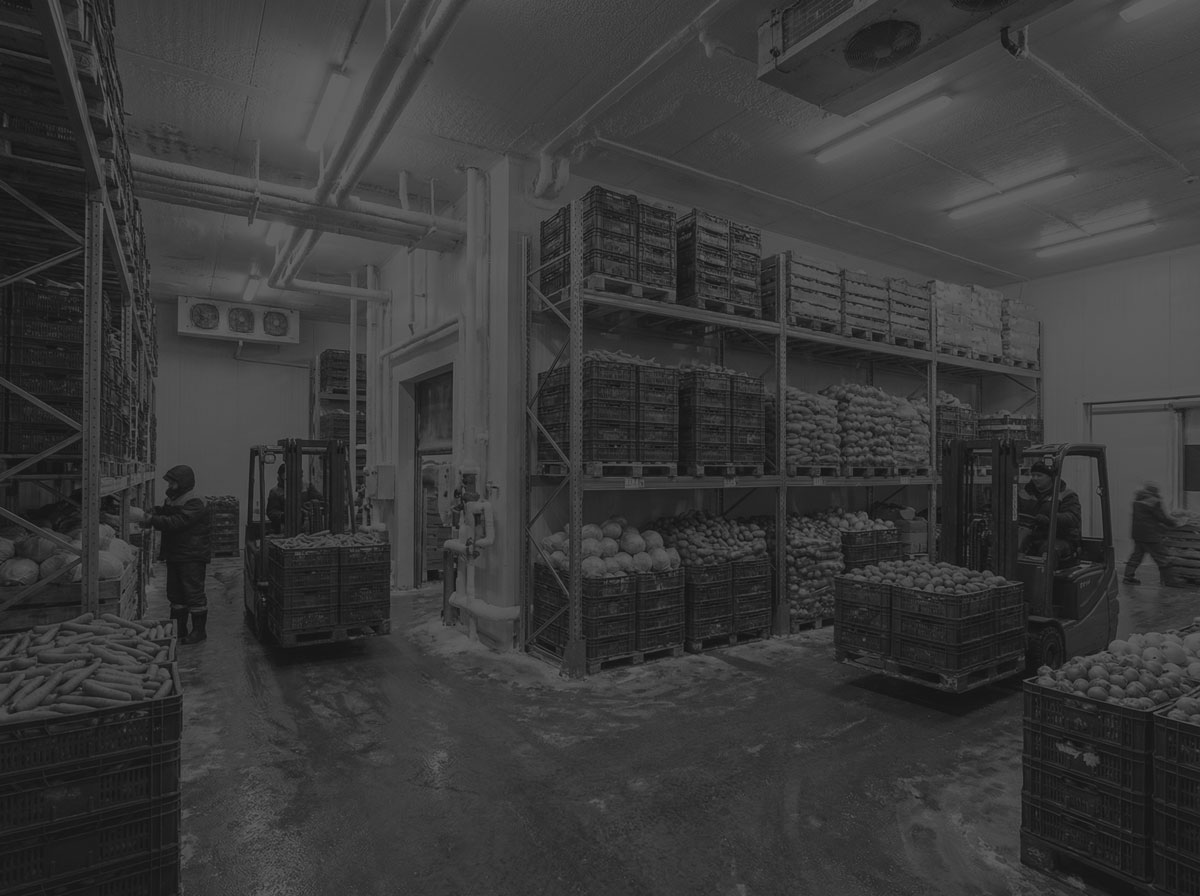

Food & Beverage Warehouse Management System: Best WMS for UK Operations in 2026.
Published: 10th September 2026

Introduction.
Food and beverage warehouses operate under pressures that no generic platform was designed to handle — perishable inventory with shrinking shelf lives, strict regulatory audits, complex allergen segregation, and the constant threat of costly recalls. A food and beverage warehouse management system is purpose-built to address these realities, combining real-time lot traceability, automated expiry-based picking, and temperature zone control into a single operational layer. In this guide, we compare the leading WMS platforms for UK food and beverage operations in 2026, break down the features that actually matter for compliance and spoilage reduction, and give you a practical framework for choosing the right system — whether you run a cold storage facility, a BRCGS-certificated manufacturing warehouse, or a high-SKU perishables distribution centre.
What Is a Food and Beverage Warehouse Management System?
A food and beverage warehouse management system is specialised software that manages inventory, traceability, and warehouse operations specifically for businesses handling consumable goods. While it shares DNA with a general-purpose warehouse management system — receiving, putaway, picking, packing, and shipping — it layers on capabilities that food and beverage operations cannot function without.
At its core, a food and beverage WMS acts as an integrated management system that connects your inventory management system, quality management system, and asset tracking management system into one platform tuned for perishable, regulated products. It enforces first-expiry-first-out (FEFO) picking logic automatically, tracks every lot and batch from goods-in to dispatch, monitors temperature zones in real time, and generates the audit documentation that environmental health officers, BRCGS auditors, and retailer technical teams expect to see on demand.
The distinction matters because food and beverage warehouses don’t just move boxes — they move products with use-by dates, allergen profiles, country-of-origin declarations, and cold chain obligations. A WMS built for this sector treats those attributes as first-class data fields, not afterthoughts bolted onto a generic inventory screen.
Who needs a food and beverage WMS?
Not every warehouse handling food products needs the same depth of functionality. The operations that benefit most fall into three broad categories:
Cold storage and temperature-controlled operations — facilities managing frozen, chilled, and ambient zones where a single temperature excursion can destroy an entire pallet load.
Certificated manufacturers, co-packers, and storage sites — businesses accountable under the BRCGS Global Standard for Storage and Distribution, BRCGS Food Safety, IFS Logistics, or FSSC 22000, alongside statutory duties under assimilated Regulation (EC) 178/2002 and HACCP-based controls under assimilated Regulation (EC) 852/2004. A non-conformance here means a downgraded certification grade, a retailer delisting, or both.
High-SKU perishables distributors — companies shipping hundreds or thousands of SKUs with varying shelf lives, allergen classifications, and customer-specific labelling requirements.
If your warehouse fits any of these profiles and you are still relying on spreadsheets, paper-based logs, or a generic ERP module for warehouse management, the operational risk you carry is significant — and growing.
Why a Generic WMS Falls Short for Food and Beverage Operations
A standard warehouse management software platform is designed to optimise storage, picking efficiency, and order accuracy. It does those things well for durable goods, electronics, or apparel. But when you introduce perishable inventory into the equation, the gaps become dangerous.
Expiry and shelf-life blind spots
Generic systems typically track inventory by SKU and location. They may support FIFO (first-in, first-out) logic, but FIFO is not the same as FEFO. A pallet received first is not always the pallet expiring first — a common scenario when suppliers deliver goods with inconsistent remaining shelf life. Without native FEFO enforcement, warehouse staff either pick manually (introducing human error) or ship products that expire before they reach the consumer. The result is spoilage, customer complaints, and retailer chargebacks.
WRAP estimates UK food waste at 10.7 million tonnes a year, of which food manufacturing accounts for around 1.4 million tonnes and retail a further 0.2 million tonnes. Not all of that originates in warehouses, but poor stock rotation is a well-documented contributor — and one that a purpose-built food warehouse system directly addresses. For businesses signed up to Courtauld 2030, it is also a reduction target you are actively reporting against.
Traceability that stops at the surface
A generic WMS can tell you what is in a location. A food and beverage WMS can tell you which lot it belongs to, when it was produced, which supplier shipped it, what allergens it contains, and exactly which customer orders it was allocated to.
That depth is not optional. Article 18 of assimilated Regulation (EC) 178/2002 — the General Food Law, given domestic effect through the General Food Regulations 2004 and, in England, the Food Safety and Hygiene (England) Regulations 2013 — requires every food and feed business to identify its immediate suppliers and immediate business customers. This is the “one step back, one step forward” duty. Read strictly, Article 18 asks you to name businesses rather than batches, but Article 19’s duty to withdraw or recall unsafe food, retailer codes of practice, and certification standards all effectively demand lot-level records in practice. Our guide to lot tracking for food traceability sets out the UK legal position in detail.
No native compliance framework
Quality management in food warehousing is not a reporting add-on. It requires real-time enforcement: blocking the dispatch of expired goods, flagging temperature breaches before they become audit findings, and generating lot-level documentation that satisfies an auditor in minutes rather than days. Generic platforms leave these workflows to manual processes, which is exactly where compliance failures originate.
The real cost of “good enough”
Operations managers often justify staying on a generic system because it “works well enough”. But the hidden costs accumulate: spoilage write-offs, overtime spent preparing audit documentation, customer penalties for short-dated deliveries, and the operational chaos of a recall executed with incomplete traceability data. These are the pain points that drive mid-market food and beverage companies to seek a purpose-built WMS — often after a triggering event.
Must-Have Features in a Food and Beverage WMS: FEFO, Lot Traceability, and Compliance
When evaluating warehouse management software for food and beverage operations, the feature set needs to go well beyond pick-and-pack efficiency. The following capabilities are non-negotiable for any serious platform in 2026.
FEFO and FIFO enforcement
FEFO — first-expiry, first-out — is the gold standard for perishable inventory rotation. A compliant food and beverage WMS automatically directs pickers to the stock with the nearest expiry date, regardless of when it was received. The system should also support customer-specific minimum remaining shelf-life rules, which UK grocery retailers apply as a condition of supply, automatically blocking allocation of products that would arrive too close to their use-by or best-before date.
FIFO remains relevant for non-perishable ingredients and packaging materials, so the best platforms allow you to assign rotation rules at the product or category level rather than applying a single logic across the entire warehouse. For a deeper look at how FEFO and lot control work in practice, our guide to choosing a WMS for food and beverage traceability, lot control, and recall readiness covers the operational detail.
Lot and batch traceability
Every unit in a food warehouse needs to be traceable to its lot or batch number, supplier, production date, and expiry date. A food and beverage WMS captures this data at goods-in — typically by scanning GS1-128 case labels and SSCC pallet labels, the standards administered in this country by GS1 UK — and maintains the chain of custody through every warehouse movement, pick, and dispatch.
This is not just about compliance. When a recall occurs, the speed at which you can identify affected lots and the customers who received them determines whether the event is a contained incident or a full-blown crisis. A spreadsheet cannot produce a complete forward-and-backward trace under time pressure. A properly configured WMS can, in minutes.
Understanding how your ERP captures and stores these records alongside the WMS matters too — our overview of ERP batch traceability explains how the data flows between the two.
Withdrawal and recall workflows
Closely tied to lot traceability, recall management is a distinct capability. A withdrawal removes unsafe product from the supply chain before it reaches consumers; a recall retrieves product that has already reached them. Your WMS should let you quarantine affected stock instantly, generate a complete forward-and-backward trace report, and produce the documentation you will need when you notify your local authority or port health authority — and, where unsafe food may have reached consumers, the Food Standards Agency incidents team or Food Standards Scotland. Some platforms also integrate with supplier and customer communication workflows to accelerate notification.
Temperature zone control and cold chain monitoring
Food warehouses frequently operate across multiple temperature zones: frozen, chilled, and ambient. Configure the thresholds against the law, not against habit:
Chilled. In England, Wales, and Northern Ireland, keeping food likely to support the growth of pathogenic micro-organisms above 8°C is an offence under Schedule 4 of the Food Safety and Hygiene (England) Regulations 2013 and its devolved equivalents. The requirement applies to the temperature of the food, not the surrounding air, and industry practice is to target 5°C to give yourself headroom against door openings and defrost cycles. Scotland’s regime is framed differently but the practical target is the same.
Frozen. −18°C or below is the commercial standard for frozen storage.
A food and beverage WMS manages putaway and picking rules by zone, ensures that temperature-sensitive products are never staged in incorrect areas, and integrates with IoT sensors or building management systems to log temperature data continuously. Set your alerting at the 5°C working target rather than the 8°C legal ceiling, so an excursion becomes a task rather than a non-conformance.
For operations with significant cold chain complexity, our guide to how a WMS can ensure food safety in the cold chain covers the specific sensor integrations and alerting capabilities you need.
Audit readiness: BRCGS, HACCP, and retailer standards
A quality management system embedded within your WMS — or tightly integrated with it — is essential for certificated food and beverage operations. The platform should maintain a continuous, time-stamped audit trail of every inventory movement, temperature reading, and user action. When an environmental health officer or your certification body’s auditor arrives, you need to produce documentation in minutes, not scramble through filing cabinets.
Key compliance capabilities include:
Automated hold and release workflows for quarantined or pending-QC stock
Configurable alerts for temperature excursions, approaching expiry dates, and shelf-life violations
Electronic signature capture and user-level access controls for HACCP critical control points
Pre-built or customisable audit report templates aligned with the standard you are certificated to
On that last point, be specific with vendors about which standard applies. For UK warehouses, that is usually the BRCGS Global Standard for Storage and Distribution Issue 4, with updated requirements taking effect for audits from 10 August 2026. IFS Logistics and FSSC 22000 are the main alternatives, and SALSA suits smaller sites supplying regional and independent customers. SQF appears on a lot of vendor marketing but is rarely the standard a UK site is audited against — treat its presence on a feature list as noise rather than a differentiator.
Practical food warehouse safety and compliance tips can complement your WMS investment by ensuring your physical operations match the rigour of your digital systems.
If you export to the United States: FSMA 204
Distributors and manufacturers shipping into the US market face an additional layer. The FDA’s Food Traceability Rule under FSMA Section 204 requires firms that manufacture, process, pack, or hold foods on the Food Traceability List to record Key Data Elements at defined Critical Tracking Events, and to produce those records as a sortable electronic spreadsheet within 24 hours of an FDA request.
Two points are widely misreported. First, the requirement is about record retrieval within 24 hours, not about tracing product within 24 hours. Second, the compliance date has moved: originally 20 January 2026, the FDA proposed a 30-month extension in 2025 and a subsequent Congressional directive fixed the enforcement date at 20 July 2028. The substantive requirements are unchanged — only the deadline moved. If you export, the KDE and CTE data model is worth designing into your WMS configuration now, because retrofitting it later is considerably more expensive.
Allergen segregation and management
Cross-contamination is a serious liability. Assimilated Regulation (EU) No 1169/2011 names 14 allergens that must be declared, and your warehouse controls need to keep those declarations true from goods-in to dispatch. A food and beverage WMS should enforce storage rules that keep allergen-containing products separated from allergen-free lines, flag potential conflicts during putaway, and include allergen data on pick instructions and shipping documentation. If you pack for customers selling prepacked for direct sale (PPDS) food, the labelling requirements introduced by Natasha’s Law make the accuracy of that data more consequential still.
Real-time inventory visibility and reporting
Operations management in a food warehouse demands more than end-of-day stock counts. Real-time dashboards showing inventory by lot, expiry, zone, and status (available, quarantined, allocated) allow managers to make proactive decisions — redirecting short-dated stock to discount channels or a redistribution partner, for example, before it becomes waste. Our article on perishable goods inventory management strategies covers the operational side in more depth.
Best Warehouse Management Software for Food and Beverage in the UK in 2026: Top Platforms Compared
Choosing the right WMS is a high-stakes decision. The platforms below represent the strongest options for UK food and beverage operations in 2026, evaluated across the feature pillars that matter most: FEFO/FIFO enforcement, lot traceability, recall management, cold chain support, and audit readiness against the standards UK sites are actually certificated to.
The ranking is weighted towards the mid-market UK operator, not the global enterprise. Manhattan and Blue Yonder are formidable systems, but for a single-site or few-site food business they usually price and scope out of contention before the shortlist is finalised, which is why they sit below platforms that regularly win in this bracket.
Rank | Platform | Best for | FEFO/FIFO | Lot traceability | Recall management | Cold chain support | BRCGS & audit support | Deployment |
|---|---|---|---|---|---|---|---|---|
1 | Balloon One | UK F&B operations wanting the platform and the implementation from one partner | Native + configured to your rules | Full + validated at go-live | Built-in + mock recall testing | Multi-zone + sensor integration | Comprehensive + audit evidence mapping | Cloud / On-premise / Services |
2 | Infios WMS (formerly Körber, previously HighJump) | Mid-to-large perishables distributors | Native | Full | Built-in | Multi-zone | Strong | Cloud / On-prem |
3 | Manhattan Active WM | Large-scale, complex F&B distribution | Native | Full | Built-in | Multi-zone | Comprehensive | Cloud |
4 | Blue Yonder WMS | Enterprise food manufacturers and 3PLs | Native | Full | Built-in | Multi-zone | Comprehensive | Cloud / On-prem |
5 | SnapFulfil | UK mid-market distributors and 3PLs wanting fast deployment | Native | Full | Built-in | Zone-based | Strong | Cloud |
6 | Indigo WMS (Indigo Software) | UK food and drink distributors and wholesalers | Native | Full | Built-in | Zone-based | Strong | Cloud / On-prem |
7 | Infor WMS | F&B manufacturers on Infor ERP | Native | Full | Built-in | Integrated | Strong | Cloud / On-prem |
8 | Made4net WarehouseExpert | Mid-market food distributors | Native | Full | Built-in | Multi-zone | Strong | Cloud / On-prem |
9 | Consafe Logistics Astro WMS | European F&B and cold storage operators | Native | Full | Built-in | Deep cold chain | Strong | Cloud |
10 | Clarus WMS | SMB food warehouses and 3PLs | Native | Full | Built-in | Zone-based | Good | Cloud |
11 | Royal 4 Systems WISE | Mid-market regulated food operations | Native | Full | Configurable | Zone-based | Good | Cloud / On-prem |
12 | Logiwa WMS | High-volume DTC and omnichannel F&B | Configurable | Full | Configurable | Basic | Moderate | Cloud |
13 | Datex FootPrint WMS | Niche cold storage and frozen food | Native | Full | Built-in | Deep cold chain | Strong | Cloud / On-prem |
Balloon One implements Infios WMS, so every capability listed against Infios at rank 2 is available through us — with the configuration, integration, validation, and managed support wrapped around it. A platform licence gives you the functionality; someone still has to design your lot code rules, map your date code formats, wire up your temperature sensors, and prove the whole thing under mock recall conditions before an auditor does it for you.
Key observations across the 2026 market
Enterprise platforms lead on depth, not on fit. Manhattan Active WM and Blue Yonder offer the broadest feature sets and the deepest integration ecosystems, and if you operate multiple large distribution centres with complex automation, they justify the investment. For everyone else the depth is largely unreachable: the implementation timelines, consultancy day rates, and internal project resource these platforms assume are enterprise-scale, and a mid-market food business often ends up paying for orchestration capability it will never switch on.
Mid-market contenders have closed the gap. Platforms like Infios, SnapFulfil, Indigo, Made4net, and Consafe now deliver native FEFO, full lot traceability, and strong compliance tooling at price points accessible to mid-size food distributors and manufacturers. The trade-off is typically in automation integration depth and global multi-site orchestration.
Check the UK installed base, not just the feature list. A platform with a strong global reputation may have only a handful of UK food sites live, which affects the quality of local support, the availability of consultants who understand BRCGS audits, and the reference calls you can actually arrange. Ask every vendor how many UK food and beverage sites they support and who provides first-line support in your time zone.
Watch the branding. The product long known as HighJump WMS became K.Motion under Körber Supply Chain Software and rebranded again as Infios in March 2025. It is the same platform lineage; older comparison articles and RFP templates that still say “Körber” or “HighJump” are describing the same system.
No single platform is perfect. Every system on this list has trade-offs. Some excel at cold chain but are weaker on omnichannel fulfilment. Others offer exceptional compliance tooling but require significant configuration effort. The right choice depends entirely on your operational profile, which the next section helps you define.
How to Choose the Right Food Warehouse Management System for Your Operation
A ranked list is a starting point, not a decision. The best food and beverage WMS for your warehouse depends on a set of operational variables that only you can define. Here is a practical framework for narrowing the field.
Define your operational profile
Start by documenting the specifics of your operation:
Temperature zones: How many distinct zones do you manage? Do you need real-time sensor integration, and at what granularity — chamber, rack, or pallet?
SKU complexity: How many active SKUs, and how many carry use-by or best-before dates, allergen attributes, or country-of-origin declarations?
Regulatory and certification exposure: Which frameworks apply — Article 18 of assimilated Regulation (EC) 178/2002, the Food Safety and Hygiene (England) Regulations 2013 or devolved equivalents, HACCP under assimilated Regulation (EC) 852/2004, BRCGS Storage and Distribution, IFS Logistics, FSSC 22000, SALSA, retailer technical standards, and FSMA 204 if you export to the United States?
Order profile: Are you shipping pallets to retail RDCs, cases to foodservice, single units to consumers, or a mix?
Current systems: What ERP, transport management system, or workforce management platforms does the WMS need to integrate with? If your customers require lot data by EDI, confirm the mapping before you sign.
Prioritise your pain points
Be honest about what is actually hurting you today. If spoilage write-offs are your biggest cost leak, FEFO enforcement and shelf-life management should top your requirements list. If you have received an improvement notice from your local authority, dropped a BRCGS grade, or been placed under a retailer corrective action plan, compliance and traceability capabilities take priority. If you are outgrowing spreadsheets and need to scale fast, implementation speed and ease of configuration matter more than having every bell and whistle at go-live.
Evaluate total cost of ownership
The licence fee is only part of the cost. The figures below are indicative UK mid-market ranges for a single-site food operation and will vary considerably with headcount, throughput, and integration complexity — treat them as a sense-check on vendor quotes rather than a budget.
Cost element | Indicative UK mid-market range |
|---|---|
Cloud WMS subscription | £1,500–£6,000 per month, typically scaled by users, sites, or order volume |
Implementation and configuration services | £40,000–£150,000 for a single site; multi-site and automation projects run well beyond |
Data migration from legacy systems | £5,000–£20,000, depending on how clean your product master is |
Hardware (rugged scanners, label printers, temperature sensors) | £600–£1,200 per scanner; £1,000–£3,000 per industrial label printer; £50–£300 per monitored temperature point |
Training and change management | £5,000–£15,000 |
Ongoing support and upgrades | Typically 18–22% of licence value annually for perpetual on-premise deployments; bundled into the subscription for cloud |
Cloud-based platforms typically reduce upfront capital expenditure but carry recurring subscription costs. On-premise deployments offer more control but require internal IT resources. Neither model is inherently better — the right choice depends on your financial structure and IT capabilities.
Request food-specific UK references
Ask every vendor for references from UK food and beverage customers with a similar operational profile to yours. A WMS that performs brilliantly in an electronics warehouse may struggle with the demands of a multi-temperature food DC. Speak directly to reference customers about implementation timelines, how the system performed during a BRCGS audit or a mock recall, and day-to-day usability on the warehouse floor.
Build your internal business case
If you are the warehouse manager or operations director advocating for a WMS investment, you need to quantify the return. Frame the business case around measurable outcomes:
Reduction in spoilage and write-offs (track your current waste rate as a percentage of throughput, and value it at cost)
Time saved on audit preparation (hours per audit event today versus projected)
Labour efficiency gains from directed picking and automated task allocation
Risk reduction from improved recall readiness (potential cost of a poorly managed recall, including retailer penalties and delisting)
These are the numbers that move budget decisions at board level.
Implementing a Food and Beverage WMS: What to Expect
Implementation is where many WMS projects succeed or stumble. Food and beverage warehouses face additional complexity because of the regulatory, temperature, and traceability requirements layered on top of standard warehouse configuration.
Typical implementation timeline
For a mid-market food and beverage operation, expect a timeline of three to six months from project kick-off to go-live for a cloud-based WMS, and six to twelve months for an on-premise or heavily customised deployment. Enterprise-scale implementations with automation integration can extend beyond twelve months. Our comprehensive guide to WMS implementation covers the full lifecycle in detail.
One scheduling note specific to this sector: avoid going live in the weeks immediately before a scheduled BRCGS audit or a seasonal peak. Give yourself at least one full audit cycle of stable operation.
Critical success factors
Data quality: Your product master data — lot structures, date code formats, allergen classifications, temperature requirements — must be clean and complete before migration. Garbage in, garbage out applies with particular force in food warehousing, and inconsistent date formats are the single most common cause of broken FEFO logic at go-live.
Process mapping before configuration: Document your current warehouse processes and your desired future-state processes before configuring the WMS. The system should enforce your best practice, not replicate your current workarounds.
Change management: Warehouse teams accustomed to paper-based or spreadsheet-driven processes will need structured training and clear communication about why the change is happening. Resistance is normal; plan for it.
Phased rollout: Consider going live with core functionality first — receiving, putaway, picking, and FEFO enforcement — then layering on advanced features like recall workflows, labour management, and analytics in subsequent phases.
Prove it with a mock recall: Before you sign off on go-live, run a mock recall in the new system. Pick a lot at random, trace it forward and backward, and time it. If it takes more than a few minutes or needs manual cross-referencing, the configuration is not finished.
Common pitfalls to avoid
Underestimating the effort required to configure lot traceability and date code rules correctly
Skipping user acceptance testing with actual warehouse staff
Failing to integrate temperature monitoring systems before go-live
Leaving lot codes off outbound documentation, so internal traceability is perfect but the chain breaks at the customer’s goods-in
Treating implementation as an IT project rather than an operations transformation
Deciding how to capture the data in the first place matters too — our comparison of barcode vs. RFID for food inventory tracking can help you choose.
Get Expert Help Choosing the Best Food and Beverage WMS for Your Warehouse
Selecting and implementing a food and beverage warehouse management system is one of the most consequential technology decisions a food business makes. The right platform reduces waste, strengthens compliance, and positions your operation to scale. The wrong one creates new problems without solving the old ones.
At Balloon One, we work with UK food and beverage businesses across the supply chain to match operational requirements with the right WMS technology — honestly, and with the experience of having implemented it behind the recommendation. Whether you are replacing spreadsheets, upgrading from a generic system, or scaling a cold chain operation, our team can help you evaluate platforms, build your business case, and plan an implementation that delivers results. Our consultants specialise in mapping FEFO, lot traceability, BRCGS evidence requirements, and cold-chain integrations to implementable WMS solutions.
If you are also reviewing the systems upstream of the warehouse, our guide to vital ERP features for food distribution is a good starting point.
Explore Balloon One’s warehouse management solutions or get in touch with our food and beverage logistics team to discuss your specific requirements.

Frequently Asked Questions (FAQ's).
A food and beverage warehouse management system is specialised software that manages inventory, warehouse operations, and regulatory compliance for businesses handling consumable products. It differs from a generic WMS by providing native support for date code tracking, lot and batch traceability, FEFO picking logic, allergen segregation, temperature zone management, and food safety audit documentation.
A standard WMS optimises storage and picking for general merchandise. A food and beverage WMS adds industry-specific capabilities — FEFO enforcement, lot-level traceability, withdrawal and recall workflows, cold chain monitoring, and audit evidence aligned to standards such as BRCGS Storage and Distribution, IFS Logistics, and HACCP. These features are essential for perishable, regulated products and are either absent or require extensive customisation in generic platforms.
Yes, in substance. Article 18 of assimilated Regulation (EC) 178/2002 requires every UK food and feed business to identify its immediate suppliers and immediate business customers — the “one step back, one step forward” rule, given domestic effect through the General Food Regulations 2004 and, in England, the Food Safety and Hygiene (England) Regulations 2013. Article 18 alone stops short of mandating internal batch-level records, but the duty to withdraw or recall unsafe food under Article 19, commodity-specific rules, retailer codes of practice, and certification standards together make lot-level traceability a practical necessity.
The core features to evaluate are FEFO and FIFO inventory rotation, full lot and batch traceability, withdrawal and recall workflows, temperature zone control, allergen segregation, real-time inventory visibility, and automated reporting for food safety audits. Integration with your ERP, transport management system, and IoT temperature sensors is also critical, as is the ability to carry lot codes onto outbound documentation and EDI messages.
FEFO stands for first-expiry, first-out. It is an inventory rotation method that prioritises picking the stock with the nearest expiry date, regardless of when it was received into the warehouse. FEFO is essential for perishable goods because it minimises spoilage and helps you meet the minimum remaining shelf-life terms UK retailers write into supply agreements. It is distinct from FIFO (first-in, first-out), which rotates stock based on receipt date alone and can leave shorter-dated products sitting in storage.
A food and beverage WMS maintains a continuous, time-stamped audit trail of every inventory movement, temperature reading, hold and release action, and user interaction. It automates compliance workflows such as quarantine holds for pending QC, shelf-life violation alerts, and lot-level trace reports. When a BRCGS auditor or an environmental health officer requests documentation, the system generates it in minutes rather than the hours or days required by manual record-keeping.
In England, Wales, and Northern Ireland it is an offence to keep food likely to support the growth of pathogenic micro-organisms or the formation of toxins above 8°C, and the requirement applies to the temperature of the food rather than the air around it. Most operators run chilled areas at 5°C or below to leave headroom for door openings and defrost cycles, and hold frozen stock at −18°C or below. Scotland’s regime is framed differently but works to the same practical targets. A WMS with temperature zone control enforces putaway and picking rules against those thresholds and logs the evidence continuously.
Yes. A purpose-built food and beverage WMS manages multiple temperature zones — frozen, chilled, and ambient — within a single facility. It enforces zone-specific putaway rules, prevents temperature-sensitive products from being staged in incorrect areas, and integrates with IoT sensors or building management systems to monitor and log temperatures continuously, triggering alerts when excursions occur.
When an incident is identified, the WMS traces forward from the supplier or production batch to every warehouse movement and customer shipment, and backward from a customer complaint to the originating lot. It can quarantine remaining stock instantly, generate complete forward-and-backward trace reports, and produce the records you need when notifying your local authority, the Food Standards Agency incidents team, or Food Standards Scotland. Because the trace is targeted, you withdraw only the affected lots rather than every unit of the product.
Only if they manufacture, process, pack, or hold foods on the FDA’s Food Traceability List for the US market. FSMA 204 is US legislation and does not apply to purely domestic UK operations. If you do export, note that the rule requires Key Data Elements to be recorded at defined Critical Tracking Events and produced as a sortable electronic spreadsheet within 24 hours of an FDA request — a records retrieval deadline, not a tracing deadline — and that the enforcement date is now 20 July 2028 following a 30-month extension.
More articles like this.