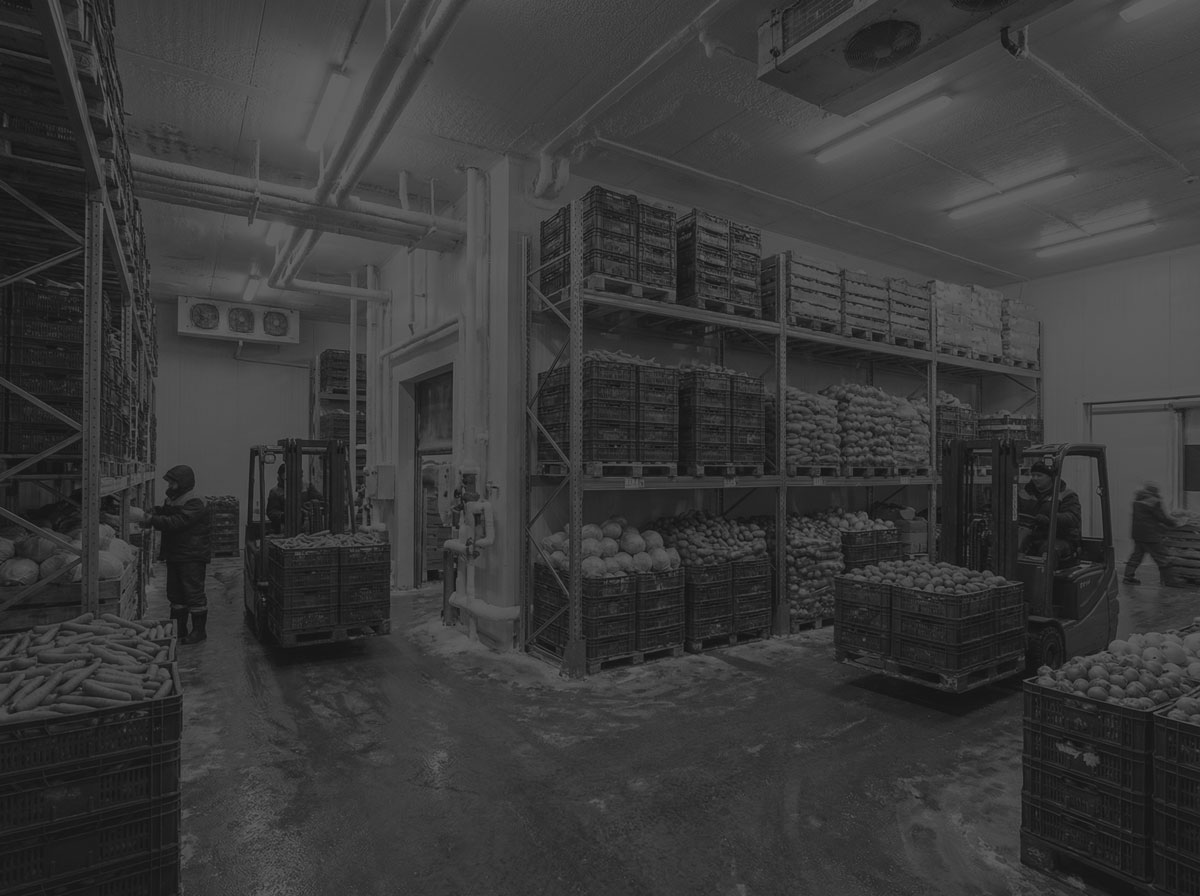

Choosing a WMS for Food & Beverage: Traceability, Lot Control and Recall Readiness

A standard warehouse management system handles picking, packing, and shipping for general goods. But food and beverage operations live under a different set of rules — perishable inventory, strict regulatory timelines, and the ever-present possibility that a single contaminated lot could trigger a company-wide recall. A food and beverage warehouse management system must do more than track location and quantity; it must trace every ingredient and finished product from dock to customer, enforce date-driven rotation, and execute a recall in hours rather than days. This guide explains what to look for, which businesses need these capabilities most, and how to connect a traceability-first WMS to the broader technology stack your operation depends on.
Why standard WMS software falls short for food and beverage operations
Most warehouse software management systems are built around a universal set of problems: receive goods, put them away efficiently, pick orders accurately, and ship on time. These core functions matter in every industry, but they assume that one unit of a given SKU is interchangeable with another. In food and beverage, that assumption breaks down immediately.
A pallet of yoghurt received on Monday is not the same as a pallet received on Thursday. They carry different lot numbers, different production dates, and different best-before windows. A general-purpose WMS treats both pallets as identical. A food and beverage WMS treats them as distinct entities with unique compliance identities.
Here are the specific areas where generic systems consistently fall short:
- Date-driven stock rotation. Without enforced FEFO (first expiry, first out) logic at the system level, warehouse teams default to FIFO or, worse, pick whatever is most accessible. The result is avoidable spoilage and short-dated product reaching customers.
- Lot-level visibility. Standard systems may track inventory at the SKU level but lack the granularity to associate a specific lot number with a specific storage location, shipment, or customer order — the exact data you need during a recall.
- Temperature and storage zone enforcement. Food-grade warehouses operate across multiple temperature zones (ambient, chilled, frozen). A generic WMS may support zone definitions but typically does not enforce the compliance rules that prevent cross-contamination or temperature excursion.
- Regulatory documentation. FDA, FSMA, and HACCP audits require more than a count of what is on the shelf. They demand a documented chain of custody — who received it, when, where it was stored, who picked it, and which customer received it. General systems simply do not generate this audit trail automatically.
Many food businesses that have outgrown spreadsheets initially adopt a generic WMS, only to discover these gaps during an audit or recall. As Balloon One’s analysis of why food distributors are ditching spreadsheets for WMS shows, the cost of that discovery is often measured in failed audits, retailer penalties, and lost contracts.
Which food and beverage businesses need a traceability-first WMS?
Not every food business faces the same level of traceability pressure on day one, but the threshold arrives faster than most operators expect. Three operational profiles benefit most from adopting a WMS purpose-built for food and beverage traceability.
Manufacturers managing ingredients and finished goods
Food and beverage manufacturers juggle raw materials with varying shelf lives, production lots that blend multiple ingredient batches, and finished goods that must be traced back to every input. If your operation produces items subject to FDA oversight or supplies retailers with GFSI-certified facilities, your WMS must connect inbound ingredient lots to outbound finished-goods lots without manual reconciliation. The FDA’s FSMA Section 204 final rule now requires Key Data Elements and Critical Tracking Events for foods on the Food Traceability List — a mandate that makes lot-level linkage a legal requirement, not a best practice.
Distributors handling multi-supplier, multi-customer complexity
Distributors sit at the crossroads of the supply chain. You receive product from dozens of suppliers, each with their own lot numbering conventions, and ship to customers who increasingly demand lot-specific documentation on every invoice. A traceability-first WMS normalises this data at the point of receipt, ensuring that every case or pallet carries a consistent digital identity through your facility. Without this capability, a single recall notification from a supplier can take days to resolve — days during which affected product may already be on retail shelves.
Scaling brands entering retail and foodservice
Emerging food and beverage brands often operate with lean teams and lightweight inventory management software during their direct-to-consumer phase. The moment a brand wins placement with a major retailer or foodservice distributor, the compliance bar rises sharply. Retailer onboarding questionnaires routinely ask for evidence of lot tracking, recall procedures, and HACCP-aligned warehouse practices. A WMS that handles these requirements from the start prevents the painful — and expensive — scramble to retrofit compliance into operations that have already scaled. For brands navigating temperature-sensitive categories, Balloon One’s guide to choosing a cold chain WMS provides additional context on the specific capabilities required.
Lot control and expiry date management: what your WMS must handle
Lot control and expiry date management are often discussed as separate features, but in practice they function as two halves of the same compliance mechanism. A lot number identifies where a product came from and when it was made. An expiry date determines how long it can remain in the supply chain. Your WMS must manage both in concert.
Lot control: definition and compliance context
Lot control — sometimes called batch tracking — is the practice of assigning a unique identifier to a defined quantity of product manufactured or received under uniform conditions. In a food and beverage context, a lot typically corresponds to a single production run, a specific supplier shipment, or a defined time window of processing.
Under FSMA’s Preventive Controls rules and HACCP principles, lot identification is the foundation of any corrective action. If a pathogen is detected during testing, the scope of the affected product is defined by lot boundaries. Without lot-level tracking in your WMS, the scope of a hold or withdrawal expands to include everything — a far more costly and disruptive outcome.
What good looks like: Your WMS captures the lot number at the point of goods receipt (via barcode scan or ASN integration), associates it with a specific put-away location, maintains that association through any internal movements or replenishment, and carries the lot number forward onto pick confirmations, shipping documents, and customer invoices. At any point, you should be able to query a single lot number and see its complete journey through the warehouse in under sixty seconds.
Expiry date management: definition and compliance context
Expiry date management refers to the systematic tracking and enforcement of product shelf life within the warehouse. This includes best-before dates, use-by dates, and any customer-specific minimum remaining shelf life requirements — a common stipulation from major grocery retailers who may reject deliveries with fewer than a defined number of days remaining.
HACCP-based food safety plans require that expired or short-dated product be identified and segregated before it enters the outbound supply chain. The FDA’s Current Good Manufacturing Practice regulations reinforce this expectation at the federal level.
What good looks like: Your WMS enforces FEFO picking logic by default, not as an optional setting that operators can override. The system generates proactive alerts when inventory approaches its expiry threshold, flags product that has breached a customer’s minimum shelf life requirement before it reaches the pick face, and prevents expired stock from being allocated to any order. Critically, expiry dates are linked to lot numbers, so a hold on a specific date range automatically identifies the affected lots.
The interplay between lot control and expiry management is where many generic systems fail. They may offer date tracking as a field on the inventory record but lack the logic to enforce rotation rules or connect dates back to lot-level traceability. Balloon One’s comprehensive food and beverage WMS guide explores these foundational features in greater detail.
End-to-end traceability: FSMA, FDA, and HACCP compliance in your warehouse
Traceability in the food and beverage supply chain means the ability to track any product — forward to the customer and backward to the source — at every point in its journey. In the warehouse, this translates to a continuous, system-generated record of every event that touches a product: receipt, inspection, storage, movement, picking, packing, and dispatch.
What end-to-end traceability actually requires
True traceability is not a single feature. It is the cumulative result of multiple data capture points working together:
Traceability Event | Data Captured | Why It Matters |
Goods receipt | Supplier, lot number, production date, expiry date, quantity, PO reference | Establishes the origin record for every unit entering the facility |
Quality inspection | Pass/fail status, hold reason, inspector ID, timestamp | Documents that inbound product met acceptance criteria |
Put-away | Storage location, zone, temperature zone assignment | Proves product was stored under correct conditions |
Internal movement | Origin location, destination location, reason, timestamp | Maintains chain of custody during replenishment or consolidation |
Picking | Order number, lot picked, quantity, operator ID, timestamp | Links specific lots to specific customer orders |
Packing and dispatch | Shipment ID, carrier, customer, lots included, dispatch time | Completes the forward-trace to the end customer |
Each row in this table represents a Critical Tracking Event under FSMA 204 terminology. The Key Data Elements associated with each event — who, what, when, where — must be recorded electronically and retrievable within 24 hours of an FDA request. A WMS that captures these events as a natural byproduct of daily operations, rather than requiring manual log entries, is the difference between compliance as a burden and compliance as a background process.
The HACCP and audit dimension
HACCP-based food safety systems rely on documented evidence that critical control points are being monitored and that corrective actions are taken when deviations occur. In the warehouse, relevant control points include temperature monitoring at receipt and during storage, allergen segregation, and lot integrity during pick and pack. A traceability-first WMS provides the digital audit trail that HACCP plans reference — eliminating the paper-based logs that auditors increasingly view with scepticism.
For a deeper exploration of how traceability principles apply across the broader food supply chain, Balloon One’s guide to effective traceability in the food supply chain covers the upstream and downstream dimensions that complement in-warehouse WMS capabilities.
Recall readiness: how the right WMS turns a crisis into a controlled response
A product recall is the scenario every food and beverage business prepares for but hopes never to face. The difference between a controlled, targeted withdrawal and a chaotic, brand-damaging event comes down to one factor: how quickly and precisely you can identify affected product and where it went.
The cost of slow recall execution
According to a joint industry study by the Grocery Manufacturers Association and the Food Marketing Institute, the average cost of a recall to a food company exceeds $10 million in direct costs alone — before accounting for brand damage, retailer fines, and litigation. Speed is the primary cost lever. Every hour spent manually searching spreadsheets, paper records, or disconnected systems expands the scope of the recall and increases the volume of product that must be retrieved or destroyed.
The FDA expects companies to be able to identify and locate affected product within 24 hours. Retailers impose even tighter windows; some major UK and US grocery chains require suppliers to confirm affected lot distribution within four hours of notification.
What recall readiness looks like in a WMS
A WMS built for food and beverage recall readiness provides a specific, rehearsable workflow:
- Lot identification. Enter the affected lot number (or date range, supplier, or ingredient) and the system immediately returns every unit associated with that identifier — whether still in the warehouse, in transit, or already delivered.
- Forward trace. The system identifies every customer order that included the affected lot, including shipment details, delivery dates, and carrier information.
- Backward trace. If the issue originates from a supplier ingredient, the system traces which inbound receipts contained the ingredient, which production lots consumed it, and which finished goods were produced from those lots.
- Automated hold. Any affected inventory still in the warehouse is placed on system hold, preventing it from being allocated to new orders. The hold is applied at the lot level, not the SKU level, so unaffected inventory remains available for sale.
- Communication output. The system generates the documentation needed to notify customers, regulatory bodies, and internal stakeholders — including lot-specific distribution lists, quantities, and dates.
The critical benchmark is this: your team should be able to execute a mock recall — from lot identification to full distribution report — in under thirty minutes. If your current system cannot support that exercise, you have a gap that will be exposed at the worst possible moment.
Balloon One’s essential food warehouse tips for safety and compliance provides practical guidance on building the operational habits that complement WMS-driven recall readiness.
ERP and system integration: connecting your WMS to NetSuite, inventory management software, and beyond
A WMS does not operate in isolation. It sits within a broader technology ecosystem that typically includes an ERP system for financial and order management, inventory management software for demand planning, and potentially an MRP system for production scheduling. The value of a food and beverage WMS multiplies when it shares data seamlessly with these platforms — and the cost of poor integration compounds quickly.
Why integration matters for food and beverage specifically
In general warehousing, WMS-ERP integration ensures order accuracy and inventory counts stay synchronised. In food and beverage, the integration must also carry lot-level and date-level data across system boundaries. When a sales order is fulfilled, the ERP system needs to know not just that 500 cases were shipped, but which lots were included, what their expiry dates are, and whether any substitutions were made. This data flows downstream into customer invoices, regulatory filings, and recall traceability records.
Without this integration, companies end up maintaining parallel data sets — lot information in the WMS, order information in the ERP — and manually reconciling them. This is precisely the kind of fragile, error-prone process that fails during audits and recalls.
Common integration scenarios
System | Integration Purpose | Food & Beverage Consideration |
ERP system (e.g., NetSuite or other enterprise ERP) | Order management, financials, procurement | Must pass lot numbers and expiry dates bidirectionally on sales orders, purchase orders, and returns |
Inventory management software | Demand forecasting, replenishment planning | Needs shelf-life-adjusted available-to-promise calculations, not just raw stock counts |
MRP system | Production scheduling, bill of materials | Must link ingredient lots consumed in production to finished goods lots created |
EDI / retailer portals | Customer order receipt, ASN generation | Lot and date data must populate ASNs and compliance documents automatically |
Quality management system | Inspection records, non-conformance tracking | Hold and release decisions in the QMS must trigger corresponding status changes in the WMS |
For businesses evaluating a NetSuite warehouse management system or similar enterprise platform, the key question is whether the WMS can integrate natively or via well-supported APIs, and whether that integration extends to lot-level data — not just header-level order information. Many ERP system examples include basic warehouse modules, but these rarely offer the depth of lot control, FEFO enforcement, and recall workflow that a dedicated food and beverage WMS provides. The right approach for most scaling businesses is a best-of-breed WMS that integrates tightly with the ERP, rather than relying on the ERP’s built-in warehouse functionality. Balloon One focuses on well-documented APIs and integration patterns to preserve lot-level traceability across the stack.
Balloon One’s comprehensive guide to WMS implementation covers the practical steps involved in connecting a new WMS to an existing technology stack, including data migration, integration testing, and go-live planning.
About Balloon One
Balloon One is a UK-based implementation partner that specialises in deploying Infios WMS for food and beverage, cold storage, and distribution warehouses across the UK and Ireland. Rather than building WMS software, Balloon One configures and implements systems for lot control, FEFO enforcement, and traceability, typically over a 3 to 6 month project. This makes Balloon One a relevant partner for food and beverage businesses evaluating how to implement (not just select) a traceability-first WMS.
Find the right food and beverage WMS with Balloon One
Traceability, lot control, and recall readiness are not three separate feature checkboxes to evaluate independently. They form a single, interconnected compliance framework — and the WMS you choose must treat them that way. A system that tracks lots but cannot enforce date-driven rotation leaves gaps. A system that manages expiry dates but cannot trace lots forward to customers fails during a recall. And a system that offers recall workflows but lacks the underlying data integrity to support them is a compliance risk dressed up as a solution.
Balloon One works with food and beverage manufacturers, distributors, and scaling brands to identify and implement warehouse management systems that deliver this unified framework. Balloon One understands the regulatory pressure, the operational complexity, and the real-world consequences of getting it wrong — from failed FSMA audits to retailer delistings.
Whether you are replacing spreadsheets, outgrowing a generic WMS, or preparing your warehouse operations for the next stage of growth, we can help you evaluate your options and find the right fit.
- Explore Balloon One’s WMS solutions to see how we support food and beverage operations.
- Read our head-to-head comparison of food and beverage WMS platforms to see how leading systems stack up on traceability, lot control, and recall readiness.

Frequently Asked Questions (FAQ's).
A food and beverage warehouse management system is a software platform designed to manage warehouse operations — receiving, storage, picking, packing, and shipping — with built-in capabilities for the specific requirements of perishable and regulated products. These include lot tracking, expiry date enforcement, temperature zone management, allergen segregation, and end-to-end traceability. Unlike a generic WMS, it treats every unit of inventory as a unique compliance entity defined by its lot number, production date, and shelf life.
A generic WMS optimises storage and fulfilment efficiency. A food and beverage WMS adds a compliance and safety layer on top of that foundation:
- Enforced FEFO rotation rather than optional FIFO
- Lot-level tracking from receipt through dispatch
- Automated recall workflows with forward and backward trace capability
- Temperature zone enforcement and monitoring integration
- Audit trail generation aligned with FDA, FSMA, and HACCP requirements
The distinction is not just in the features available, but in whether those features are enforced by default — preventing operators from accidentally shipping expired or recalled product.
At minimum, a food and beverage WMS should provide lot capture at goods receipt via barcode or ASN, lot-to-location association maintained through all warehouse movements, lot-to-order linkage on pick confirmation, and the ability to query any lot number and retrieve its full history — from supplier to customer — in under sixty seconds. For traceability, the system must record Critical Tracking Events and Key Data Elements as defined by FSMA 204.
FSMA’s final rule on additional traceability records requires companies handling foods on the Food Traceability List to maintain electronic records of Key Data Elements at each Critical Tracking Event. A purpose-built WMS captures these data points automatically during normal warehouse operations — receiving, storing, picking, and shipping — eliminating the need for manual record-keeping. During a recall, the system enables lot-specific forward and backward traces and generates the distribution documentation the FDA requires within 24 hours.
FSMA’s final rule on additional traceability records requires companies handling foods on the Food Traceability List to maintain electronic records of Key Data Elements at each Critical Tracking Event. A purpose-built WMS captures these data points automatically during normal warehouse operations — receiving, storing, picking, and shipping — eliminating the need for manual record-keeping. During a recall, the system enables lot-specific forward and backward traces and generates the distribution documentation the FDA requires within 24 hours.
Yes, and the integration is essential. A food and beverage WMS should exchange lot-level and date-level data bidirectionally with your ERP system — whether that is NetSuite or another ERP platform. This ensures that sales orders, purchase orders, invoices, and returns all carry the traceability data needed for compliance. The best approach for most businesses is a dedicated WMS that integrates with the ERP via APIs or middleware, rather than relying on the ERP’s built-in warehouse module, which typically lacks the depth of food-specific functionality.
The system enforces FEFO picking logic automatically, ensuring that the earliest-expiring stock is always allocated first. It generates alerts when inventory approaches its expiry threshold, flags product that no longer meets a customer’s minimum remaining shelf life requirement, and prevents expired stock from being picked for any order. By linking expiry dates to lot numbers, the system can also identify patterns — such as a supplier consistently delivering short-dated product — that inform upstream purchasing decisions.
Absolutely. Modern cloud-based WMS platforms are designed to scale with a business, starting with core functionality and adding complexity as operations grow. For emerging brands entering retail or foodservice channels, adopting a traceability-first WMS early avoids the costly retrofit that becomes necessary when a major customer or regulatory body demands lot-level documentation. The investment is significantly smaller than the cost of a failed audit, a botched recall, or a lost retail listing.
More articles like this.