

What's Failing in Cold-Chain Operations?
UK cold-chain operators face three system failures that create compliance risk, waste products, and delay regulatory responses.

Introduction.
These three system failures occur at the integration points between temperature monitoring, inventory management, and audit documentation.
Temperature data living separately from inventory data. When a pharmaceutical shipment arrives outside specification, warehouse teams spend hours correlating sensor logs with receiving records. Leading WMS systems can integrate temperature, humidity, and location tracking directly into inventory management. You monitor conditions across ambient, chilled, and frozen zones automatically, with all data connected to specific batches and locations.
Delayed visibility creating compliance failures. Manual temperature logs reach compliance teams after products enter distribution. Real-time tracking of expiry dates with configurable FEFO management ensures products reach customers within use-by date tolerances while reducing waste. This transforms compliance from documentation you produce after problems occur into operational prevention.
Audit trails requiring manual reconstruction. MHRA, DEFRA, and FSA regulations require immediate digital evidence of temperature control and traceability. Infios WMS provides lot, batch, and consignment traceability with built-in recall management, creating auditable records that regulators accept without manual reconstruction.
As an Infios Partner with three consecutive Partner of the Year awards (2019-2021), Balloon One implements cold-chain WMS solutions for food and beverage distributors.
Practical question for warehouse managers. When regulators request temperature compliance documentation, can your platform produce validated records immediately, or does your team spend days reconstructing evidence from multiple systems?

Three Industries Where This Matters Most.
Cold-chain WMS’s have become essential infrastructure for three UK sectors, each with distinct requirements that only integrated systems address effectively.
Food and beverage distribution manages thousands of SKUs with shelf lives from 3-day fresh produce to 12-month frozen goods. Getting this wrong means waste from expired stock or stockouts from over-cautious ordering. Infios WMS provides real-time expiry tracking with configurable FEFO management, ensuring products reach customers within preferred use-by date tolerances.
Wing Yip, a leading Oriental food distributor, demonstrates this capability. After implementing Infios WMS, Andy Yarnall, Group Operations Manager, confirmed the impact. “Stock inventory checks are carried out weekly on key lines and are consistently accurate. We have seen better traceability of goods and our processes are better streamlined.”
Pharmaceuticals and healthcare require validated chain of custody between 2-8°C. Manual logging no longer satisfies regulatory requirements. Infios WMS can connect with sensors for temperature and humidity in ambient, chilled, and frozen zones, with goods automatically assigned to correct locations based on temperature requirements. This prevents human errors in temperature-critical handling.
E-commerce extends temperature control to the last mile. Direct-to-consumer fulfilment forces smaller depots to adopt the same monitoring that large distribution centres use. When used with handheld scanners, staff receive guided prompts through warehouse tasks. You can onboard temporary staff for seasonal surges without compromising temperature control.
What connects these sectors is the requirement for WMS treating temperature data as inventory data, not separate compliance documentation.

Growth Multiplies Complexity.
The UK cold-chain market is predicted to exceed $50 billion by 2033, but growth multiplies operational complexity. Every additional pallet, trailer, and storage zone increases your data points, compliance obligations, and energy costs. The challenge is whether warehouse systems can manage this complexity or whether operations fragment across disconnected platforms.
The regulatory environment is tightening simultaneously. UK food suppliers face evolving FSA traceability requirements and new waste reporting obligations. Pharmaceutical distributors work under continued MHRA and EU GDP pressure to prove cold-chain integrity from receipt to dispatch. ESG and Scope 3 emissions disclosure pull temperature-control performance into board-level audits.
What unifies these pressures is the demand for real-time proof. Paper logs and disconnected systems no longer demonstrate due diligence when auditors arrive or retailers conduct supply chain assessments. Documentation that satisfies regulators must come directly from operational systems rather than retrospective reporting.
Modern WMS platforms can capture environmental data directly from sensors, scanners, and transport links. When goods are automatically assigned to correct receiving, storage, and dispatch locations based on temperature requirements, this creates complete digital audit trails as natural outputs of daily operations.
This transforms what compliance means practically. Rather than assembling evidence after questions arise, you generate validated records continuously through normal warehouse activity. Warehouse managers evaluating new systems face a practical question: Does your current platform produce validated compliance records as operational outputs, or does documentation require separate effort after operations complete?
How Modern WMS’s Solve Cold-Chain Requirements.
Modern WMS platforms address cold-chain challenges through integrated capabilities that previous generation systems handled as separate functions.
IoT sensor integration provides continuous environmental monitoring. Temperature and humidity data feeds directly into inventory management systems. When temperature readings integrate with stock locations and batch data, you see exactly which products occupy zones experiencing variations. This enables intervention before products move outside specification rather than discovering issues during manual checks.
Automated storage and retrieval systems reduce exposure time. When your WMS orchestrates movements based on order priority and temperature sensitivity, you minimise cumulative exposure that degrades product quality and drives up energy costs. AI-driven slotting and FEFO algorithms optimise pick paths to reduce dwell time in temperature-critical zones.
Energy efficiency integrates with operational efficiency. Cold storage represents one of UK logistics’ most energy-intensive activities. Modern WMS platforms integrate energy-meter data and door-cycle counts into operational reporting. When your system tracks which picking patterns require most freezer access time or which replenishment schedules create unnecessary compressor load, you gain data needed to optimise for energy efficiency alongside picking efficiency.
Infios WMS can prioritise slotting patterns reducing travel distance in frozen zones. When high-turnover items occupy locations minimising freezer door-open time, this reduces both energy consumption and temperature fluctuations affecting product quality. These adjustments may seem modest individually but compound into measurable sustainability gains.
For UK retailers and third-party logistics providers with sustainability commitments under scrutiny, this integration delivers documented evidence of energy efficiency and temperature integrity through the same platform.

The Business Case for Cold-Chain WMS.
Cold-chain capability is becoming a visible differentiator, rather than invisible infrastructure. Retailers, manufacturers, and healthcare providers select logistics partners based on who can prove temperature control, respond fastest to issues, and demonstrate lowest waste rates in their category.
This differentiation runs directly through warehouse management systems. A cold-chain-ready WMS provides a single version of truth for temperature, stock levels, energy consumption, and traceability in real time. This integrated data becomes a commercial asset when responding to tenders, conducting customer audits, or demonstrating compliance to regulators.
For third-party logistics providers, margins remain thin and energy costs stay high, but data trust scales effectively. When you embed compliance, efficiency, and sustainability into one WMS platform, you compete on capability rather than price alone. You’re proving that you safeguard value, not just store goods.
Predictive capability extends competitive advantage. Rather than addressing temperature excursions after they occur, modern systems manage conditions to prevent excursions from happening. The WMS continuously analyses environmental trends and equipment performance data. When zones show performance issues, the system flags reallocation automatically rather than waiting for manual checks to discover problems.
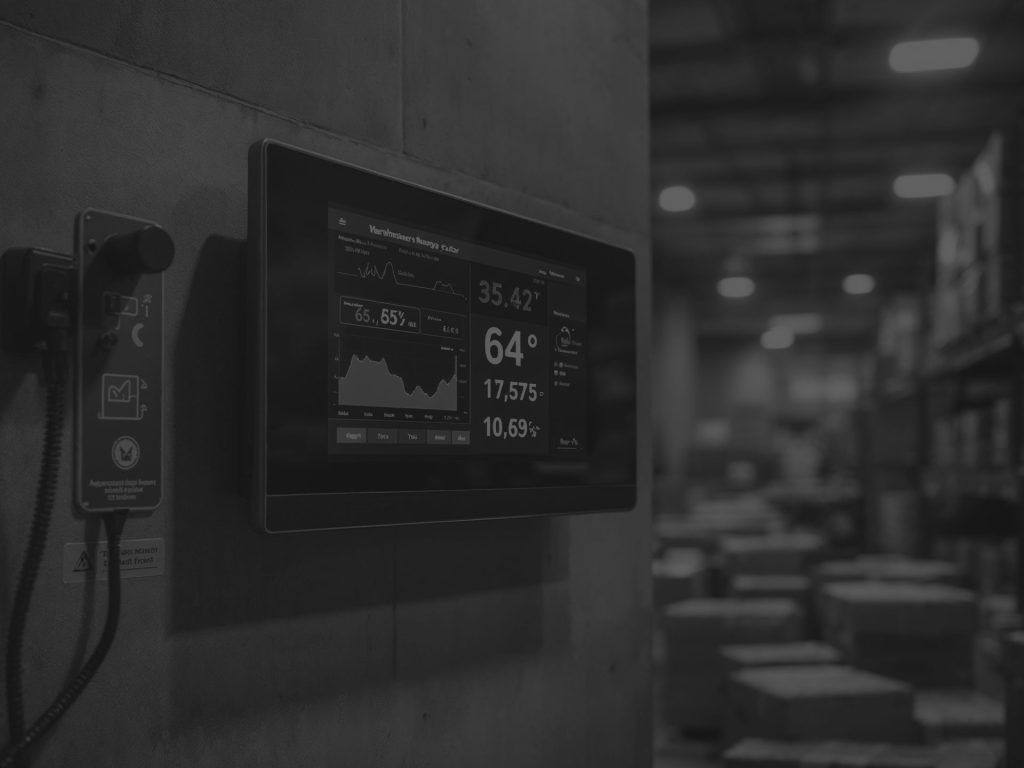
Transparency develops alongside prediction as a core operational requirement. Clients and regulators expect immediate access to digital audit trails and real-time dashboards showing current conditions across all temperature zones. When you demonstrate control through integrated systems rather than assembled paperwork, you reduce both compliance risk and administrative burden.

Evaluating Cold-Chain WMS Capability.
Warehouse managers evaluating WMS for cold-chain operations should assess four integrated capabilities that determine whether systems deliver operational value or create documentation burden.
Temperature integration with inventory management. Can the system connect environmental sensor data directly to batch records and locations, or does temperature monitoring exist as separate compliance documentation? Systems requiring manual correlation between temperature logs and inventory records create the delays that turn minor issues into major compliance failures.
Real-time compliance documentation. Does the platform generate validated audit trails as operational outputs, or does your team assemble evidence retrospectively when auditors arrive? The difference determines whether compliance prevents problems or documents failures after they occur.
Energy visibility alongside operational metrics. Can you see which picking patterns, slotting arrangements, and replenishment schedules drive energy consumption in temperature-controlled zones? Without this visibility, you optimise for operational efficiency while energy costs remain invisible until utility bills arrive.
Predictive alerts and automated responses. Does the system flag potential temperature excursions before they affect products, or do you discover problems during manual checks? Predictive capability transforms cold-chain management from reactive firefighting to preventive control.
Balloon One specialises in implementing Infios WMS for food and beverage distributors. With over 20 years of supply chain technology experience and global implementation services across three continents, we help warehouses develop integrated capabilities that cold-chain operations demand.
If you’re evaluating whether your current systems can meet evolving cold-chain requirements, our team can discuss your specific operational context and regulatory obligations. Contact us to explore how modern WMS addresses integrated requirements that cold-chain logistics now demands, or learn more about effective traceability in the food supply chain and cold-chain temperature monitoring.

Frequently Asked Questions (FAQ's)
- Integration gaps: Temperature monitoring, inventory management, and audit documentation often operate as separate systems, leading to inefficiencies.
- Delayed visibility: Manual temperature logs delay compliance responses, increasing the risk of regulatory failures.
- Manual audit trails: Reconstructing compliance documentation manually is time-consuming and prone to errors.
- Integrated data: Combines temperature, humidity, and location tracking directly with inventory management for real-time monitoring.
- Real-time compliance: Tracks expiry dates and generates validated audit trails automatically, preventing compliance issues.
- Automated traceability: Provides digital evidence of temperature control and traceability for immediate regulatory acceptance.
The UK cold-chain market is projected to exceed £25 billion by 2026, increasing operational complexity. Simultaneously, regulatory requirements are tightening, demanding real-time proof of compliance and sustainability.
- IoT sensor integration: Continuous environmental monitoring linked to inventory data.
- Automated storage and retrieval: Minimizes exposure time and optimizes energy efficiency.
- Predictive alerts: Flags potential temperature excursions before they occur.
It provides real-time data on temperature, stock levels, and energy consumption, enabling businesses to prove compliance, reduce waste, and respond quickly to issues. This differentiation helps logistics providers compete on capability rather than price.
More articles like this.